Sometimes funny, sometimes kinda erudite; it's the current projects, influences and opinions of contemporary artist, James Thatcher, Pacific Northwest.
Monday, October 27, 2014
The Curious Vision
Artwork
is the perfect example of the whole being greater than the sum of its parts.
Monday, October 6, 2014
The Stillness Project
When I read
the phrase, “Receive my Peace” in Susan Young’s daily devotional Jesus Calling I knew I had the bones of
a nice inspirational image for the Facebook.
In the
throes of my new grid based artworks, the idea had morphed into arrays of
individual panels. I’d just completed a
couple dozen small white boxes. Moving the piles around had gotten
interesting as I began stacking them artfully.
I’d taken 62 photos as each box added to the stack made for a new
arrangement.
There would
be plenty to choose from to illustrate the “Receive My Peace” concept.
Surprisingly,
this was not the case. Looking with the
guiding principle of “Peace” I found these images—every one of them—very
busy.
This was disturbing. I thought that these little white boxes were undeniably quiet works. No.
For a guy who uses “Out of the
abundance of the heart the mouth speaks,” (Matthew 12:34) in his artist’s statement, I had some
thinking to do.
![]() |
| Cube Drawing, Graphite and Acrylic on Prepared Paper 1993 © James Thatcher |
What was
peace and how is it expressed?
![]() |
| Layout Template for "Discovering the Broken Obelisk" , Artist's Book, The Art Library, Brooklyn, NY |
The concept
of “stillness” came forward: the square is
a practical expression of equilibrium and balance because it is equal on all sides. It can be an effective symbol of stillness.
Surface quality was something to consider as well. Is my signature heavy texture indicative of peace? Not so much…
Then, in a
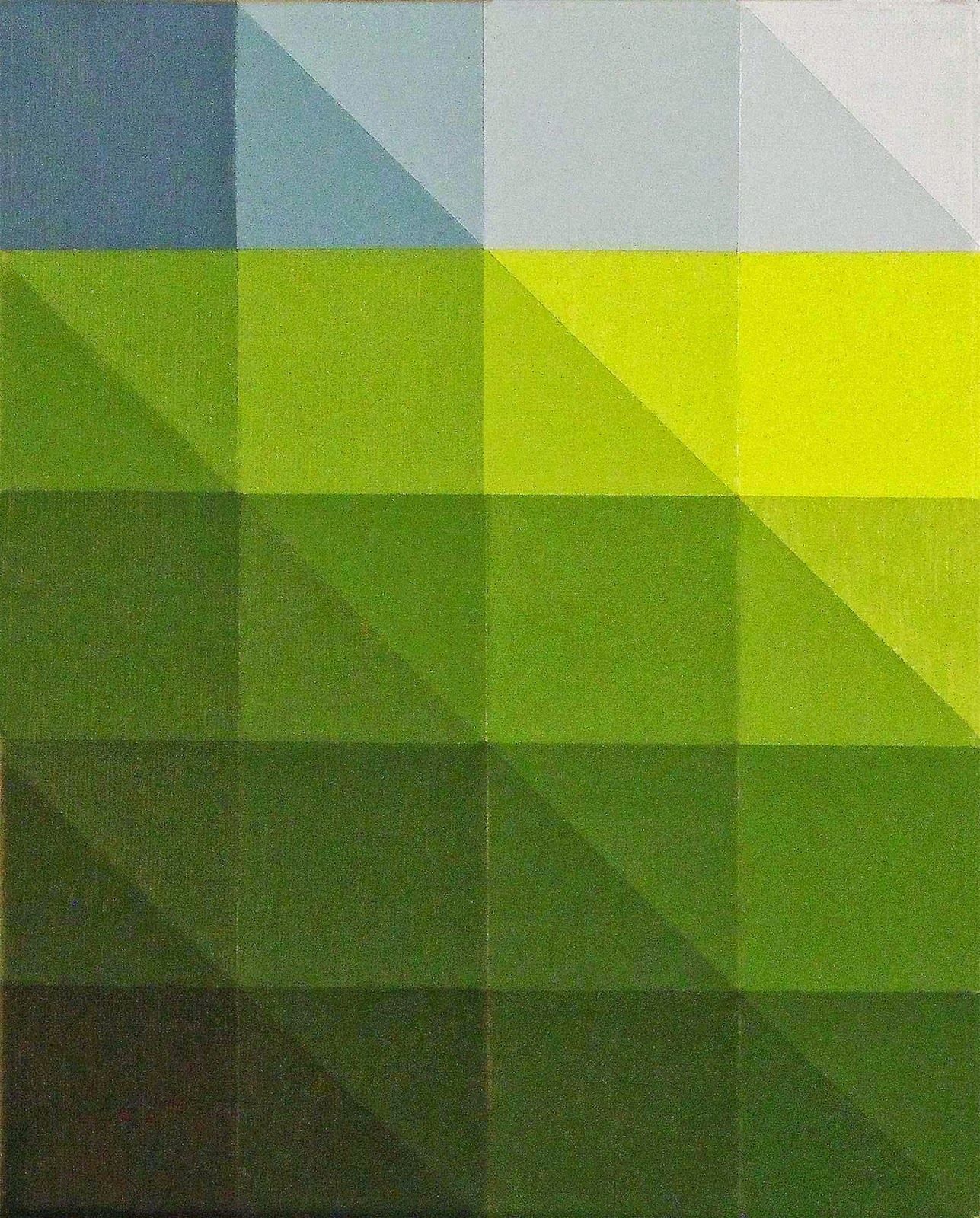
conversation with a friend about “The Stillness Project” the idea of the color of peace came up. What is the color of
peace?
Sunday, September 7, 2014
35 Years Later: The Monet Experience
In autumn of
1980 I lived with the Richard K. Thomas family in
Potomac, MD for 3 months and ended up staying in Washington, DC for 10 years. During those first months Rich and I
would ride into DC almost daily—Rich to his office and post as Chief Economic
Correspondent for Newsweek Magazine, me to museums and galleries to gorge on
art.
On a visit
to the National Gallery (West Wing) I found copyists diligently working before
paintings of old. This was like something
out of an art history book where artists of a certain period copied the masters. I decided I’d better do the same if I had any
intention of being a serious artist.
![]() |
| A brilliant job of rendering Rembrandt |
Quick
conversations with the copyists got me to the Registrar's Office for my own application. (You can review the process for receiving a copyist permit for the National Gallery's West Wing here.) A month later, after reference letters, the interview and background checks I was in the mix.
I made two
dreadful renditions of Monet’s “Rouen Cathedral in Afternoon Light”. One wasn’t enough. Clearly Monet didn’t have Grumbacher oil
paints at his disposal during the late 1800’s…and my canvases weren’t
proportioned correctly…. Still it was
surprising that the second copy was no better than the first. Luckily no photo evidence exists of this work.
But the experience is all about the influence, rather than the objects themselves. Monet’s palette became internalized
regardless of mismatching colors. I
chose Monet because I was having color problems, (which continued), but
decades later this experience is where I go for color choices and relationships.
![]() |
| The real deal, Monet's "Rouen Cathedral in Afternoon Light" |
More subtle
and surprising was the effect of the Impressionist surface. Texture has become a subject in its own right
in my recent work. I’ve been doing
fairly heavy textures in my artwork since 1992, referencing Julian Schnabel and Anselm Kiefer's paintings from the 1980’s. But this interest really traces back to the Monet
experience.
![]() |
| Hay and Bulrushes embedded in Latex Paint, 1 of 18, "Arrayed", James Thatcher © 2014 |
Reducing my
imagery in the recent grid paintings, I’ve come to understand the profound
influence of copying Monet. Not in becoming
a plein air painter; not in terms of
emulating Impressionism, but in fundamental terms of palette and surface
texture.
![]() |
| "After Monet", Cat Litter, Wood Chips, Latex Paints and Acrylic on Canvas, James Thatcher © 2004-2014 |
Color and texture are my current subject matter.
Thirty-five years later essential elements of the Monet experience fuel
my work. Who would know, who could tell? It wasn’t exactly copying the “old masters”
but it has provided a constant foundation to my paintings and technique.
![]() |
| "Monet Rouge", Hay, Bulrushes, Latex Paint and Acrylic on Plywood Panel, James Thatcher © 2014 |
Copying Monet's "Rouen Cathedral in Afternoon Light" hasn’t been the only influence on my artwork, but it has been
fascinating to see it in light of current developments in the studio. I was surprised and wanted to share the
discovery.
Labels:
Anselm Kiefer,
art influences,
color,
color problems,
copy,
copyist,
copyist application,
grid,
Impressionism,
Julian Schnabel,
Monet,
National Gallery,
palette,
Rouen Cathedral,
texture
Location:
Cobleskill, NY, USA
Saturday, August 30, 2014
A Moment in the Studio
Recently, I
had a moment in the studio that made me stop everything!
You know how
you’ll have your agenda set, your process well directed, all systems GO—me
too! Letting the process take over has allowed
paintings to emerge without preconceived notions. Ah, to be so free….
But this
time the picture jolted together before me and I was stunned. Let me explain:
I’d killed my
current painting a couple of times already.
I had a strong bed of texture laid down: hay and cattails (bulrushes) embedded in a
pool of dried latex paint. Typically I
use the lines from the textural underpainting to direct the subject matter, but
it just wasn’t working out this time.
So I’d
painted over the whole uptight mess—twice now.
I’d gotten a beautiful effect during paint-over #1 by applying a dark
wash of watery paint over my texture. I
decided to do that again.
All was
going as according to plan. The dark
wash had gathered into all the pockets of that voluptuous surface and I was forging
ahead with a new course of action.![]() |
| "Sweetgrass Drawing 23/30", 8" x 10", Pastel and Gesso on Prepared Board |
I couldn’t
seem to get a break with this painting! The
next day I decided that I could use the grid formula to increase the scale
of the drawing and transfer it to the painting.
A piece of cake, old school but
imminently doable….
This
decision proved to be the game changer.
I measured
out a 12” array over the surface and drew the lines in with charcoal. The panel was laid on saw horses and as I
finished the grid I set it up to begin the transfer process.
GASP.
The grid
broke up this epic field of texture into bite sized portions. It isolated sections so that they became a
group of individual pieces rather than an incomprehensible whole. The visually overwhelming (who knew?) had
become manageable.
In a rush
of realization I set down the charcoal and stepped away from the painting. Oh my goodness, what have I done!?
It was actually
interesting! The different pieces
compared so well to each other…my eye was bouncing from one section to the next,
over and across—I had to sit down. I’d
been knocked from Abstract Expressionism into Minimalism in one aesthetic
hammer blow.


And I haven't gone back...
In just a few days I’ve completed 3 other highly textured grid paintings using different colored washes for the background. I’ve filled in the squares with fabulous colors (say goodbye to the latex neutrals!).
I’ve left sections empty on some paintings. I’ve left a group of 4 large panels void of any further markings after gorgeous blue green washes. I’ve built 18 small square surfaces for a grid installation painting which are now heaped with hay and bulrushes and drying in the barn.
![]() |
| The current studio view |
And the
struggle, the noodling and the exertion, effort and strain of composing the “brilliant
and breathtaking” is gone. I’d had
the nagging feeling that this work with the hay didn't need to go much further, but I just hadn't found the way yet.
Now it’s
full steam ahead.
If you have
frustration or nagging feelings with your creations, Listen To That. Where are they coming from? What do they mean? They were telling me that what I was doing wasn't what I needed; that I was pushing
past my own artwork.
Blow it
out—figure it out—talk it out—work it out.
Be bold, be alert, and look for your moment. Expect it.
Grab it. Run with it!
Labels:
abstract art,
art problems,
artists problems,
breaking out,
contemporary art,
encourage,
encouragement,
enlarge,
grid enlargement,
inspiration,
minimalism,
painting,
problem solving,
scale,
square,
studio
Thursday, July 24, 2014
Studio Strategies--The Treadmill!
Consider this idea as you have started
to gain momentum in the studio, or have a problem area in your current
artwork.
Over the winter I got into the habit of using our treadmill in my studio. What a great way to look at art! With nothing else to distract, aesthetic issues get an in-depth viewing with plenty of time to consider, “What if…”
I saw an article on CBS Sunday Morning about incorporating treadmills into the office, with workstations outfitted for pacing. They made the point that endorphins are released, increasing creative thinking. I’ve definitely experienced this as I tread before my paintings.
Over the winter I got into the habit of using our treadmill in my studio. What a great way to look at art! With nothing else to distract, aesthetic issues get an in-depth viewing with plenty of time to consider, “What if…”
I saw an article on CBS Sunday Morning about incorporating treadmills into the office, with workstations outfitted for pacing. They made the point that endorphins are released, increasing creative thinking. I’ve definitely experienced this as I tread before my paintings.
I regularly have concerns about my abstract images. What’s working, what isn’t; what’s the matter, why doesn’t it work? Often I will put off decisions about that
next step until I’ve had a chance to tread before the artwork.
Sometimes I am anxious as I enter my studio: what needs doing, deadlines, or ordering my
day. The treadmill is a great way to
sort it all out. It’s perhaps counter
intuitive, because I feel urgency about getting started. But the exercise orders my thinking. Inevitably, I end my workout knowing what to
do and how to do it.
I go for 45 minutes at the beginning of my studio day. I slowly build up to 3.5 mph at 6 degrees
incline. It takes about 20 minutes to
get there; I hold it for 10 minutes, and then back off for the final 15
minutes. Not a grueling pace, but it
gets the job done. Hydrate!
I’m considering including treadmills in exhibitions of my
artwork. I want to encourage viewers to
regard my pieces more thoroughly. It’s
an accomplishment to get 30 seconds of serious consideration for a painting from exhibit
attendees…how about 5 minutes from treading?
5 minutes while looking at an artwork won’t release any endorphins,
but that’s a significant increase in viewing time. What if a treadmill was installed for every
painting—or maybe every 2 or 3 pieces? That
would be a more practical arrangement as a number of artworks could be viewed
per station. What about groups of
treadmills, so more than one viewer could participate at once?
Would this encourage interaction between viewers? Would people become self-conscious?
The treadmill creates an interactive element, which is novel
for a standard exhibition of paintings.
Perhaps this would create opportunities for different kinds of exhibits
and venues? Maybe the gym!
At any rate, if you’ve got the machine give it a try! I’ve been surprised by the quality of viewing
experience. By the end of my session any aesthetic choices have
been well considered. I have utter confidence going forward. I've weighed my options, visualized
the results and resolved the situation...all before touching brush to canvas.
It’s a great approach to problem solving!
Labels:
art,
art influences,
art problems,
art viewing,
artists block,
artists problems,
begin,
breaking out,
critical thinking,
deconstruction,
problem solving,
restarting,
stalled,
stuck,
studio
Monday, July 7, 2014
Idea Generation Drawings--Getting ReStarted
This series is geared towards artists
who want to get re-started in the studio after a long break.
Also
referred to as “Ideations”, the Idea Generation Drawing is all about producing ideas
quickly. Each drawing builds upon the
last. It’s a fast way to discover and
explore ideas. One day you may find that
your sheets are finished works in themselves.Take a sheet of 18”x24” drawing paper and divide it into 16 equal sections. In art school we were told to fold the sheet in half, then again, again and again—16 quick equal sections. Now get your kitchen timer and set it for 5 minutes. Yes, 5 minutes.
GO! At this pace you have less than 20 seconds to
fill each section. I encourage you to
finish your first sheets in under 5 minutes.
Why? We are most interested in getting restarted through this series of posts. It is extremely important to see yourself produce a full sheet of drawings, regardless of what you think about the level of finish or quality. In fact, do not think at all about quality or finish with this work. Our interest lies in the flow of ideas, their encouragement and their direction.
Do a second
sheet of idea generation drawings. Make
sure you follow the time limit and get all the spaces filled. It may not be easy for you, but again, we are
approaching this exercise as a re-starting technique. Don’t spend any energy fighting it, use all
of your energy making yourself produce quickly, right now.
Do you need to
do a third? Go ahead then.
![]() |
| Page one of drawings for sculpture, 2014 (Technically, thumbnail sketches) |
![]() |
| Page two, drawings for sculpture |
How about taking a photo
of it and projecting it to scale it up?
There are
multiple benefits to this exercise. You’ll
unearth ideas, explore and develop them; you’ll find surprise sections that
stand on their own as images, you’ll develop diptychs or triptychs, even book
sequences; not to mention how this process enables working in a series. This is a fruitful approach as a general studio practice as well as
for beginning new artworks.
![]() |
| Page three. |
I fully
encourage you to engage with this exercise.
Do you have a friend who might join you?
Sometimes it is easier to see how the process works when you look at someone
else’s efforts.
Idea
generation drawing is a valuable skill to acquire and serves well in the lifelong
pursuit of art. You can go through
dozens of ideas quickly, arriving at images which are already proven worthy of pursuit. It will increase your chances
for success and a lot of new artwork.
Saturday, June 28, 2014
YES! The Artist Speaks
From a reception for local donors to The New Vision Heron Mural:
I’d like to begin with one word,
because that is how this project and everything associated with it began. It’s a small word, but a beautiful and
powerful word: YES!
When we say “Yes” individually, doors
open and change begins. Being in
agreement with an idea, a statement, or proposal means that it goes forward
with our blessing.
When Lee Whaley said, “Yes, I will
pursue having the heron mural redone”, the idea went forward in strength;
blessed with her skill and experience. And
look where we are!
When I said, “Yes, I will do the
mural”, it opened up 3 years of experience:
From research and design to committee approval, online crowd source fundraising,
and fabrication; Then press coverage as
well as getting to write my own guest blog article. It meant mounting an accompanying exhibit, not
to mention reconnecting with my past…everything made possible by one word.
It’s one word, but it has needed many
voices.
When we collectively say, “Yes”, WE
create opportunity. WE empower those who
are asking to make something happen—WE are in agreement with the happening of an
idea, and are instrumental in its formation, it’s becoming a reality.
“Yes” extends our world. It expands our reality. It creates possibility. It unleashes the power to get results. It represents a decision, a course of action,
and a responsibility.
The responsibility to honor those who
agree to support, because now your sound judgment goes on display—the
responsibility to verify your support AS SOUND JUDGEMENT.
Thank you for your support. Thank you for your affirmation. Thank you for YOUR vision.
When you drive by your mural think
about this. Think “YES” for your town,
your downtown, and for what might present itself next. Now you’ve got some experience with the power
of your support. It’s the power of your choice,
your voice, your vote.
You gave me
an opportunity by saying “Yes”, and now we stand together with a new vision-- in
a new vision. Thank you for your
confidence…it has been a soul changing experience.
Additionally, here's a link to a guest blog post I was invited to write for Artsy Shark about public speaking for artists:
http://jtnwdc.wix.com/jamesthatcherarts
Subscribe to:
Posts (Atom)